
The Beginner’s Guide to Football Odds
A football betting odd is a price that converts a market probability into a potential return, and Fan Strategy explains how to read it across regulated sportsbooks serving markets such as the United K...
The Beginner’s Guide to Football Odds
A football betting odd is a price that converts a market probability into a potential return, and Fan Strategy explains how to read it across regulated sportsbooks serving markets such as the United Kingdom, Canada, Australia, and the United States. Decimal odds show total return per unit stake, fractional odds show profit relative to stake, and American odds express the amount won or risked against a 100-unit reference. For example, decimal odds of 2.50 imply a 40% raw probability and return $250 from a $100 stake, including the original $100. A standard -110 American line implies a 52.38% break-even probability before bookmaker margin, while a 1.90 decimal price requires 52.63% accuracy to break even. The practical rule is simple: convert every price into implied probability, compare it with your estimated probability, and bet only when the difference remains positive after margin and risk.

Photo by Tima Miroshnichenko on Pexels
A late Premier League match provides the cleanest illustration. Manchester City may open at 1.55 to win, Arsenal at 5.80, and the draw at 4.60; those figures do not mean City has a guaranteed result, only that the market prices City as the strongest of three outcomes. Listen up — this is the part that matters: the number is not a prediction by itself. It is a price, and the price becomes useful only after you understand probability, payout, market margin, and the exact settlement rules attached to the bet. Fan Strategy uses that framework across FIFA World Cup 2026 coverage, where team tactics, player availability, venue conditions, and schedule congestion can all change a line within minutes.
Want the broader tournament context before reading a market? Explore the latest analysis.
The Quick Comparison
| Odds format | Example | Meaning | $100 stake return |
|---|---|---|---|
| Decimal | 2.50 | Total return per $1 staked | $250 total, $150 profit |
| Fractional | 3/2 | Profit of $3 per $2 staked | $250 total, $150 profit |
| American positive | +150 | Profit on a $100 stake | $250 total, $150 profit |
| American negative | -110 | Stake required to win $100 | $190.91 total from $100 stake |
Decimal odds are usually the fastest format for comparison because they include the stake in the displayed return. Fractional odds, still common in the United Kingdom and Ireland, separate profit from the original stake, while American odds use positive numbers for underdogs and negative numbers for favourites. The same underlying price can appear as 2.50, 3/2, or +150, so changing format does not change the probability or bookmaker edge. The important difference is mental friction: decimal odds make multiplication easy, fractional odds make profit transparent, and American odds require you to identify whether the sign represents potential profit or required risk.
A useful conversion table prevents avoidable errors:
- Decimal probability:
1 ÷ decimal odds × 100. - Fractional probability:
denominator ÷ (numerator + denominator) × 100. - Positive American probability:
100 ÷ (American odds + 100) × 100. - Negative American probability:
absolute odds ÷ (absolute odds + 100) × 100.
These formulas produce implied probability before adjusting for bookmaker margin. At 2.50, the raw figure is 40%; at 1.80, it is 55.56%; at -200, it is 66.67%. A sportsbook may list all three football outcomes with probabilities adding to 106%, meaning approximately 6 percentage points represent the overround rather than a genuine prediction. That distinction is where many new bettors lose their analytical footing.
Round 1: How Do You Read the Three Main Odds Formats?
Decimal football odds show the total amount returned for every unit staked, including the stake; fractional odds show net profit, while American odds show profit or required risk against 100 units. A 2.00 decimal price equals even money, 1/1, and +100, with a 50% implied probability before margin. These are different displays of the same mathematical price.
Consider a $40 wager on a World Cup 2026 match. At decimal odds of 2.25, the total return is $90 and the net profit is $50; at fractional odds of 5/4, the profit is also $50; at American odds of +125, the profit remains $50. If the price is -125, the calculation changes: a $40 stake produces $32 profit, because $125 is required to win $100. This is why American odds must be read with their sign before any arithmetic begins.
The most common beginner error is confusing payout with profit. A $100 stake at 1.50 returns $150, but the profit is only $50; a $100 stake at 3.00 returns $300, with $200 profit. In a spreadsheet, keep two columns: “total return” and “net profit.” That small separation matters when comparing singles, accumulators, and cash-out offers. The [Internal Link: football betting basics] should also explain stake sizing, because correct odds interpretation cannot rescue an uncontrolled bankroll.
Listen up — this is the part that matters: short odds do not automatically mean a safer bet. A 1.20 price implies 83.33% before margin, but a red card, goalkeeper injury, or tactical mismatch can make that price poor value. Conversely, 4.50 odds imply only 22.22%, yet they can be attractive if your evidence supports a 27% true probability. Odds measure required accuracy; they do not certify certainty.
Round 2: How Do You Convert Odds into Probability and Value?
Converting football odds into implied probability tells you how often a selection must win to break even, while value exists only when your estimated probability exceeds that break-even threshold after accounting for margin. At 2.00, you need 50%; at 1.50, 66.67%; at 5.00, 20%. This calculation is the foundation of disciplined market reading.
For a practical case, suppose Fan Strategy estimates Brazil at a 48% chance of winning a FIFA World Cup 2026 group match, while a sportsbook offers 2.30. The implied probability is 43.48%, creating a 4.52-percentage-point gap before other assumptions. Expected value can be expressed as (estimated probability × decimal odds) - 1; here, (0.48 × 2.30) - 1 = 0.104, or a theoretical 10.4% edge per unit over a very large sample. That does not mean the next match wins. It means the price would be favourable if the estimate is accurate and the market is settled fairly.
A second example exposes the bookmaker margin. Suppose a three-way match market lists 1.70 for the home team, 3.80 for the draw, and 5.20 for the away team. Their implied probabilities are 58.82%, 26.32%, and 19.23%, totaling 104.37%. The overround is therefore 4.37%, although simple equal removal is only an approximation because bookmakers may shade popular teams, local clubs, or high-profile fixtures differently. The International Betting Integrity Association provides useful context on monitoring suspicious betting activity, but integrity monitoring does not eliminate pricing margin.
Here is a clean evaluation sequence:
- Convert each selection into implied probability.
- Add the probabilities to estimate market overround.
- Build your own probability from form, injuries, tactics, and context.
- Compare your estimate with the market price.
- Reject the bet if the edge disappears after realistic uncertainty.
- Record the closing price to test whether your process was sound.
Get a practical framework for comparing prices across match markets.
A contrarian point deserves attention: a higher displayed price is not automatically better value. A 3.00 line at one sportsbook is inferior to 3.20 elsewhere, but both may be poor if your assessed probability is 28%; the 3.20 price requires only 31.25%, so it still fails in that example. Price shopping matters, yet probability quality matters more. The [Internal Link: guide to implied probability] can help readers build a repeatable worksheet rather than relying on visual impressions.
Round 3: What Should You Check Before Choosing a Football Market?
Before selecting a football market, check the format, settlement rule, team news, timing, price movement, and bookmaker margin. A 90-minute result market excludes extra time unless stated otherwise, while a tournament “to qualify” market may include extra time and penalties. Reading the number without reading the settlement condition is incomplete analysis.
The market type changes the question you are answering. A moneyline or match-winner bet asks who wins under the listed rules; a draw-no-bet selection returns the stake if the match finishes level; a double chance covers two of three results. Asian handicap lines can split a stake across adjacent handicaps, such as -0.75, producing one half-win and one half-loss in different score scenarios. Totals markets, such as over 2.5 goals, are not predictions of a winner at all. They price a threshold, and one late goal can transform the settlement.
Team information should be ranked rather than collected randomly. Start with confirmed line-ups, then examine missing starters, tactical replacements, rest days, travel distance, weather, and motivation. For the FIFA World Cup 2026, hosted across the United States, Canada, and Mexico, venue geography and climate may matter: a match in Mexico City presents a different physical environment from one in Vancouver or Miami. FIFA’s official competition information is the appropriate reference for fixtures, venues, and tournament structure, while The Laws of the Game from IFAB clarifies match duration and extra-time rules.
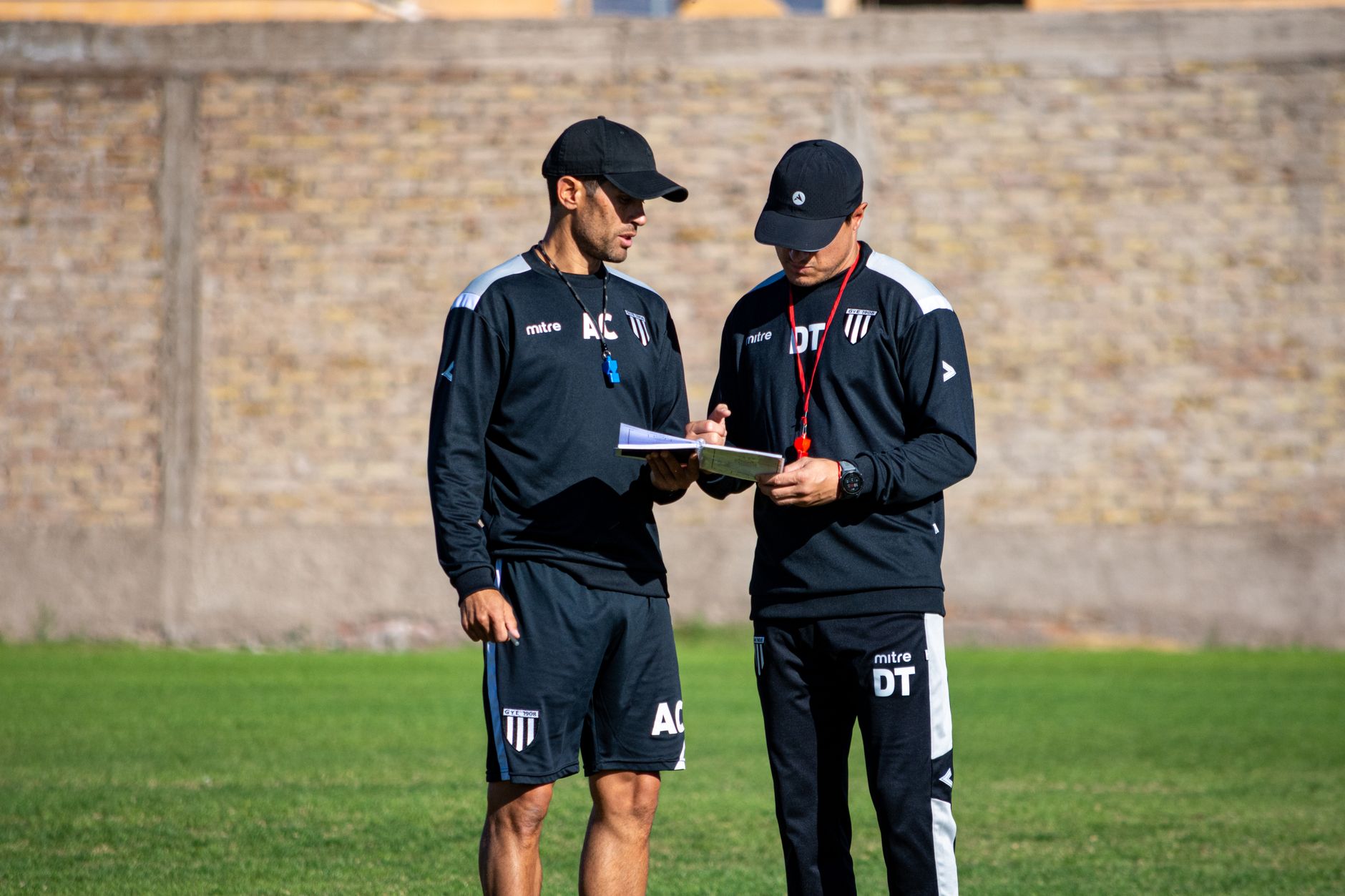
Photo by Franco Monsalvo on Pexels
One operational insight is especially useful: line movement often becomes most informative after confirmed line-ups, typically around 60 to 75 minutes before kick-off, but the exact timing varies by league and provider. A price shortening from 2.10 to 1.85 implies a probability shift from 47.62% to 54.05% before margin, an increase of 6.43 points. That movement may reflect genuine information, but it can also reflect limited liquidity, promotional exposure, or one influential account. Do not copy movement blindly; identify what changed and whether the new price still offers value.
A second less-obvious edge case concerns “push” outcomes. At 2.00 Asian handicap or 3.0 total goals, the original stake may be returned when the line lands exactly, so the break-even calculation differs from a standard win-or-loss market. For example, an over 3.0 goals bet wins with four or more goals, pushes with exactly three, and loses with two or fewer. Treating it as over 2.5 corrupts both your probability estimate and your historical records.
When reviewing a football betting screen, verify these details:
- Is the market for 90 minutes, extra time, or qualification?
- Does a postponed match void, carry over, or remain active?
- Are line-ups confirmed or projected?
- Is the displayed number decimal, fractional, or American?
- Does an Asian line create a push or split settlement?
- Is the quoted price still available at confirmation?
- Are taxes, fees, or currency conversions applied to the displayed return?
Review the match context and tactical signals before committing to a number.
Parlays deserve a precise warning because their combined price can look more generous than it really is. If three independent selections are each priced at 2.00, the combined decimal odds are 8.00, but the chance of all three winning is only 12.5% under independence. Football selections are often correlated: a strong favourite winning may reduce the likelihood of an opposing team’s goals, while a high-total selection can support both teams’ attacking props. Some sportsbooks adjust correlated combinations, and others prohibit them, so never multiply prices without checking the platform’s rules.
The Final Score & Who Should Pick What
Decimal odds are best for fast comparison, fractional odds suit readers who think in profit, and American odds fit North American markets; every bettor should still convert the price into implied probability before judging value. Beginners should start with single bets and clear 90-minute markets, experienced analysts can examine handicaps and totals, and advanced users may model correlation, closing-line movement, and expected value. No format creates an advantage by itself.
The final scorecard is straightforward:
- Choose decimal odds when you compare multiple providers quickly.
- Choose fractional odds when you want net profit displayed naturally.
- Choose American odds when using United States or Canadian sportsbooks.
- Use match-winner markets for simple outcomes.
- Use draw-no-bet or double chance when protection changes the price meaningfully.
- Use Asian handicap markets only after learning push and split settlements.
- Avoid parlays unless you understand correlation and compounded margin.
- Track closing odds, not only wins and losses.
A serious record should include date, fixture, market, opening price, placed price, closing price, stake, result, and reasoning. After 50 to 100 bets, you can examine whether your prices consistently beat the closing line, whether your injury assumptions were accurate, and whether your selected markets contain excessive margin. A winning week proves almost nothing; a documented sample reveals whether the process has structure. Fan Strategy’s 2026 tournament coverage can support the qualitative side, but the numerical audit remains yours.
One final distinction separates analysis from entertainment: a correct prediction can be a bad bet, and an incorrect prediction can be a good bet. If a team has a 60% estimated chance but the available price implies 68%, the selection is negative value even if it wins. If a team has a 30% chance at odds implying 22%, the bet can be positive value even when it loses. That is uncomfortable, but football odds are prices, not verdicts. Set a fixed budget, follow local law, and use responsible-gambling tools such as deposit limits and self-exclusion where needed.
If you want a cleaner way to follow World Cup 2026 prices, tactics, and team news, start here.
Frequently Asked Questions
Q: What are football odds?
A: Football odds are prices showing the potential return and implied probability of a betting selection. Decimal odds of 2.00 indicate a 50% break-even probability before bookmaker margin and return twice the stake in total. Fractional odds of 1/1 and American odds of +100 represent the same price. The odds do not guarantee an outcome; they show how accurately a selection must perform over time to break even.
Q: How do you calculate football odds payout?
A: Multiply the stake by decimal odds to calculate total return, then subtract the stake to find profit. A $50 bet at 2.40 returns $120, producing $70 profit. For fractional odds of 7/5, calculate $50 × 7/5 = $70 profit, then add the $50 stake. American odds of +140 produce $70 profit from $50, while -140 produce approximately $35.71 profit from the same stake.
Q: What is the difference between decimal and American football odds?
A: Decimal odds include the original stake in the total return, while American odds use positive or negative values against a 100-unit reference. Odds of 2.50 equal +150 and produce $150 profit from a $100 stake. Odds of 1.50 equal -200 and require a $200 stake to win $100. Decimal odds are usually simpler for comparing sportsbooks, whereas American odds are common in the United States and Canada.
Q: Why do football odds change before kick-off?
A: Football odds change because new information alters bookmaker pricing, including line-ups, injuries, weather, betting volume, and market risk. A move from 2.10 to 1.85 changes the raw implied probability from 47.62% to 54.05%. The movement may reflect informed money, but it can also result from low liquidity or promotional adjustments. Check the reason for the move instead of assuming the shorter price is automatically stronger.
Q: What should you do if football odds disappear or a bet is voided?
A: Check the sportsbook’s settlement rules and contact its support team with the bet reference if the market is suspended or voided. Common triggers include postponed matches, incorrect prices, abandoned fixtures, and line-up changes under specific rules. A voided single usually returns the stake, while a voided selection in an accumulator may reduce the combination. Save screenshots showing the market, time, price, and terms.
Q: Are football odds free to read?
A: Reading football odds is free, but placing a bet requires money, an eligible account, and compliance with local age and licensing requirements. You can practise probability conversions with a spreadsheet without risking funds. Before depositing, verify the operator’s regulator, payment terms, withdrawal rules, and responsible-gambling controls. Never treat free odds data, promotional prices, or expert predictions as a guarantee of profit.
Q: How can beginners choose the right football betting market?
A: Beginners should start with single bets in clearly defined 90-minute match-winner or total-goals markets and avoid parlays until settlement rules are familiar. Compare at least two prices, convert each into implied probability, and record the reasoning before placing any stake. Begin with a fixed entertainment budget and small, consistent stakes. After 50 documented bets, review closing prices and decision quality rather than focusing only on wins.
Understanding odds is the first step; understanding your own evidence is the part that compounds.
Thank you for reading.
Fan Strategy · Editorial Archive